
Blog Post
What’s the Difference Between a Software Orchestration Platform and a Broadcast Control System?
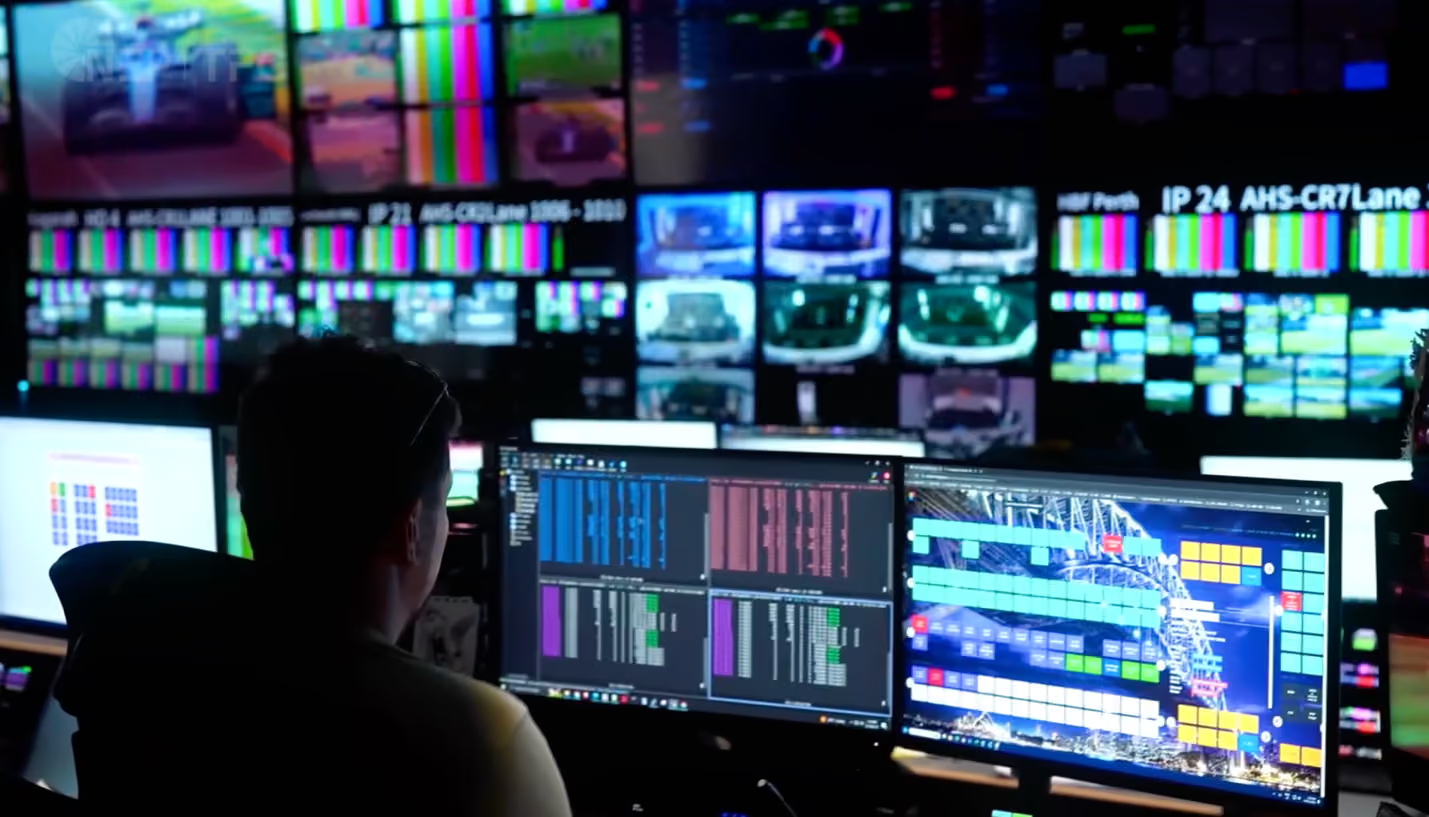
As media organizations transition toward software-defined production, hybrid infrastructure, IP connectivity and cloud-based workflows, new categories of software are emerging to help manage growing operational complexity.
Two of the most important categories are:
- Software orchestration platforms
- Broadcast control systems
While these technologies often work together, they solve different challenges.
Since the launch of NEP Platform, one question has surfaced frequently:
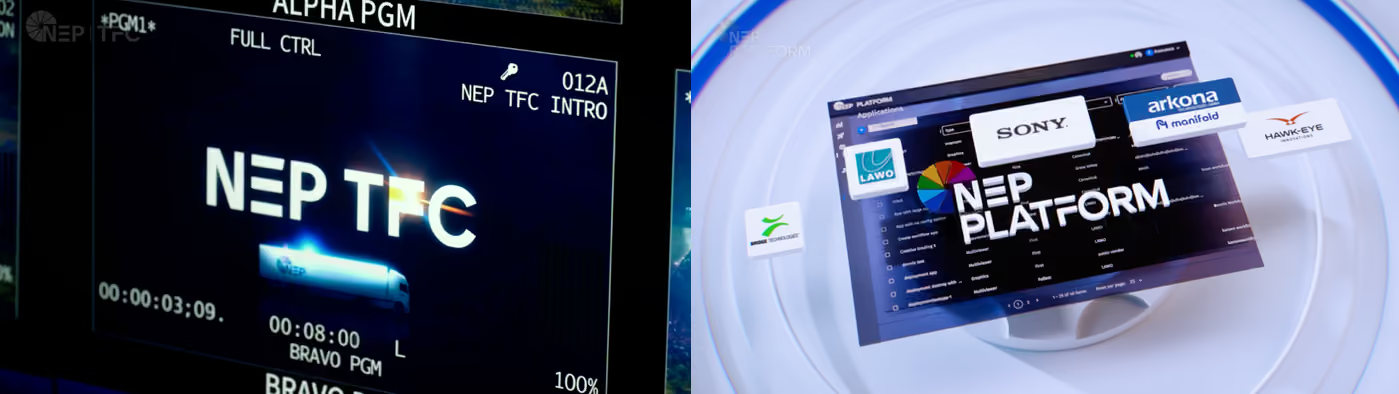
“How is NEP Platform different from TFC?”
It's a fair question. Both are software solutions developed by NEP's global team of developers, both help organizations manage increasingly complex production environments, and both play important roles in modern broadcast and media operations.
Before exploring the details, here's the high-level distinction:
- NEP Platform orchestrates the applications, infrastructure and resources that power live production.
- TFC controls and manages the live production environment.
Together, they solve different challenges within modern media production.
To better understand why these technologies serve different roles, it helps to first understand the difference between a software orchestration platform and a broadcast control system.
Why Modern Production Requires Both Orchestration and Control
Today’s live productions rarely operate from a single location or rely on a fixed set of hardware.
Production teams increasingly work across:
- Centralized production facilities
- Mobile units
- Remote production environments
- Software-based production applications
- Traditional broadcast hardware
- Cloud infrastructure
At the same time, media organizations are being asked to deliver more content, support more platforms, reach more audiences and operate more efficiently than ever before.
As these environments become more distributed, organizations need two distinct capabilities:
- The ability to deploy and manage production applications and infrastructure efficiently.
- The ability to control, monitor and operate the underlying technical environment.
These are related challenges—but they are not the same challenge.
One focuses on making resources and applications available when and where they are needed. The other focuses on ensuring those resources can be managed, monitored and operated effectively.
Understanding that difference helps explain the roles of software orchestration platforms and broadcast control systems.
What is a Software Orchestration Platform?
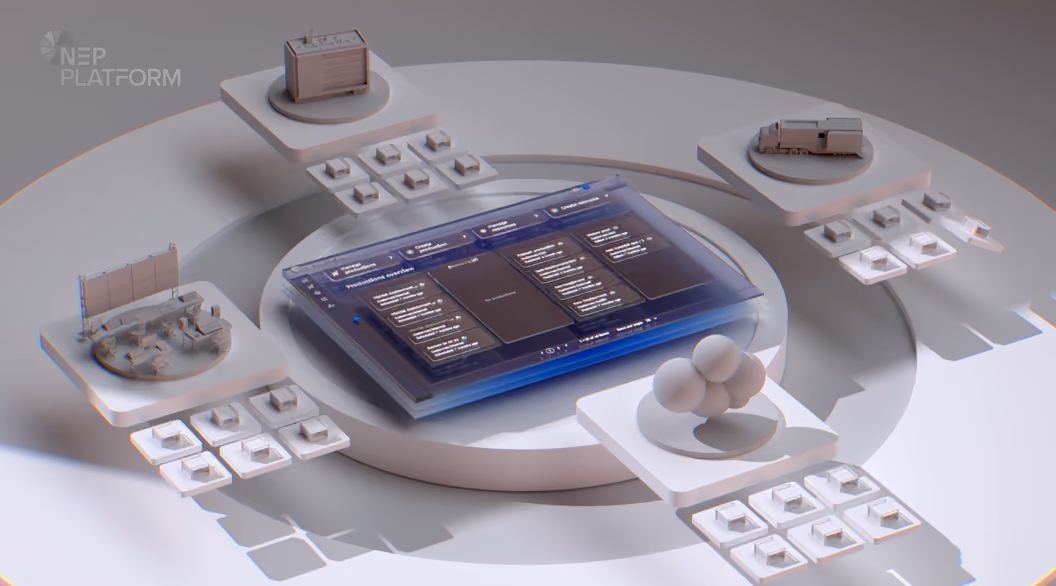
A software orchestration platform helps organizations deploy, configure, manage and scale production applications and infrastructure.
Rather than relying on fixed hardware configurations, software orchestration platforms allow teams to dynamically allocate resources based on production requirements.
Applications can be deployed faster, resources can scale up or down as needed, and organizations gain greater flexibility in how they design and operate workflows while maintaining the consistency and reliability required for mission-critical productions.
In a modern media environment, a software orchestration platform can help organizations:
- Deploy applications faster
- Scale resources dynamically
- Improve infrastructure utilization
- Reduce manual configuration, increasing reliability
- Support hybrid hardware and software workflows
- Maintain flexibility across multiple vendors
The goal is agility, efficiency and choice.
NEP Platform: NEP’s Software Orchestration Platform
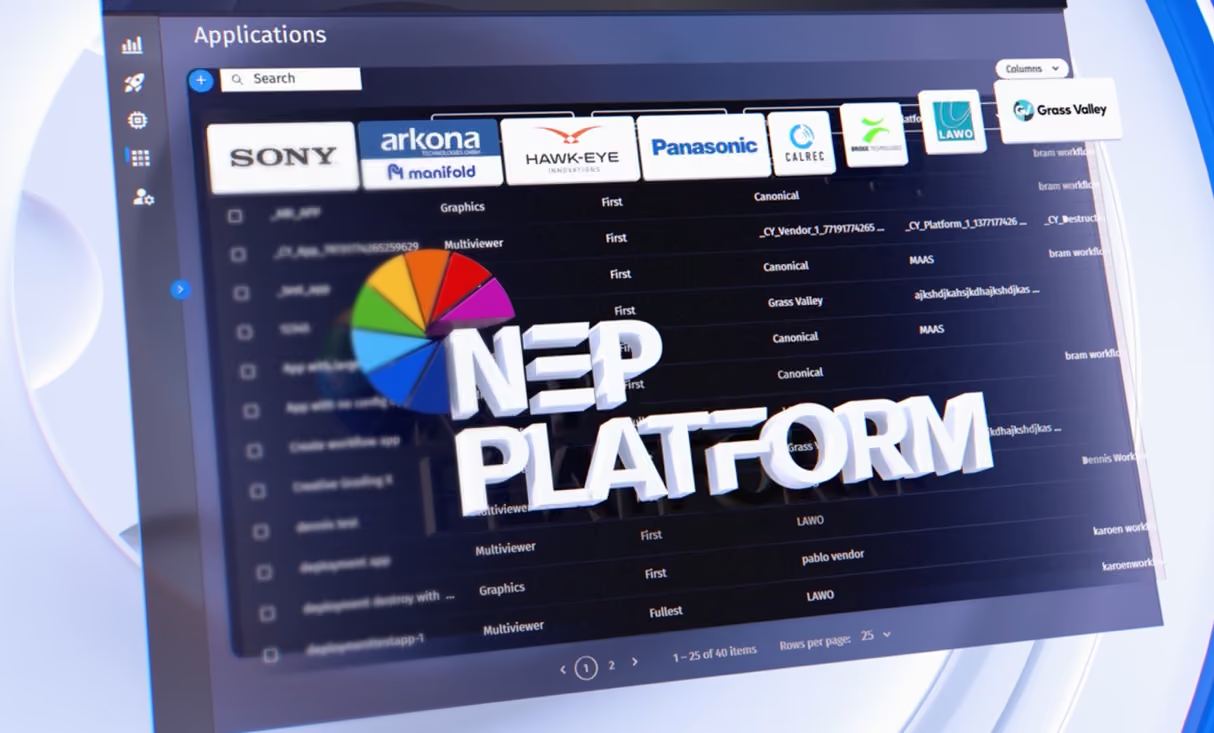
NEP Platform is NEP’s software orchestration platform, designed to help media organizations transition toward more flexible software-defined production models.
Through a single secure interface, customers can deploy and manage production applications from multiple technology providers while maintaining the freedom to choose the workflows that best fit their operation.
Today, NEP Platform supports production applications across vision mixing, audio mixing, replay, multiviewers, infrastructure, monitoring and measurement, with plans to expand the ecosystem with new integrations from leading technology providers.
One of the key advantages of NEP Platform is its ability to support hybrid production environments. With NEP Platform, organizations can deploy software-based workflows alongside existing hardware investments, allowing them to modernize incrementally rather than requiring a complete infrastructure replacement.
NEP Platform also provides greater visibility into how resources, infrastructure and software licenses are being utilized. By dynamically allocating resources based on production requirements, organizations can improve efficiency, forecast costs more accurately and scale operations as demand changes.
For many customers, this combination of flexibility, vendor choice, operational efficiency and investment protection is what makes software-defined production the smarter operational model.
In simple terms:
NEP Platform helps organizations orchestrate production infrastructure and applications across today’s hybrid production environments.
What is a Broadcast Control System?
A broadcast control system focuses on a different challenge.
Rather than orchestrating applications and infrastructure, a broadcast control system helps organizations manage and operate the technical environment itself.
Broadcast operations involve a complex collection of systems, including:
- Broadcast infrastructure
- Networks
- IT systems
- Devices
- Monitoring platforms
- Security systems
- Facility operations
Traditionally, these systems are managed through multiple interfaces.
A broadcast control system brings those elements together through a unified control layer.
The goal is operational simplicity, visibility and control.
TFC: NEP’s Broadcast Control System
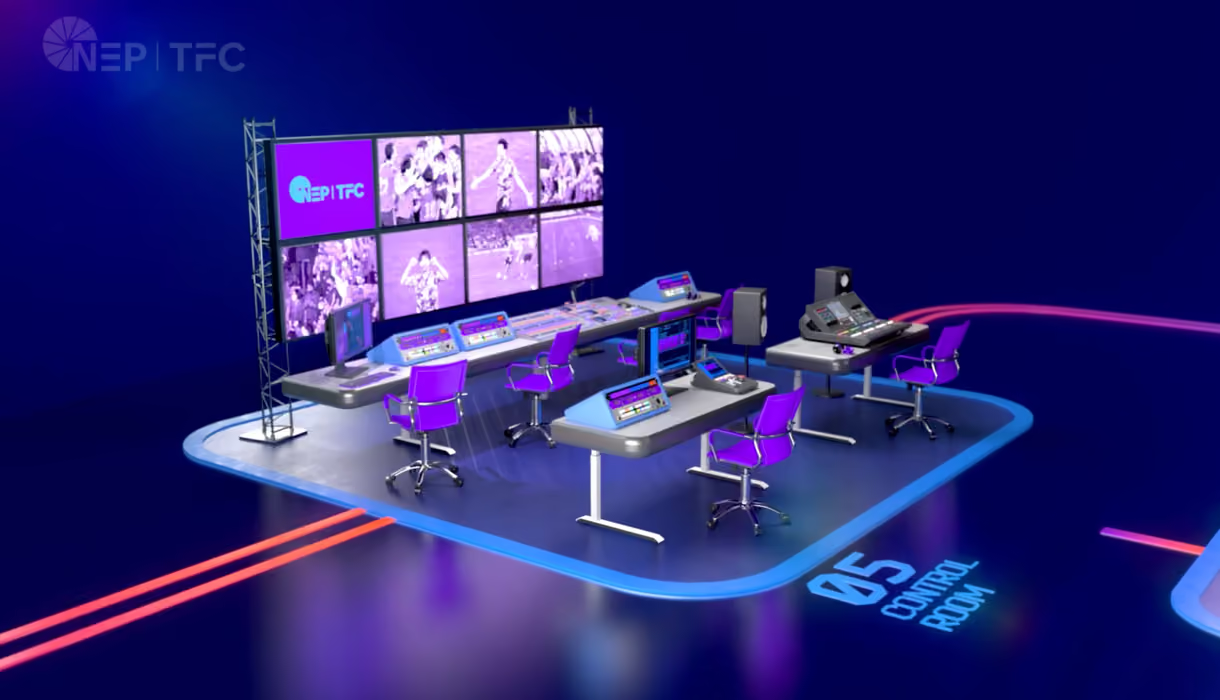
TFC serves as NEP’s broadcast control system.
It provides a unified control plane that enables operators, engineers and technical teams to manage broadcast, IT and network environments from a single system.
By simplifying control and monitoring, TFC helps teams manage increasingly complex production environments without increasing operational burden.
In simple terms:
TFC helps teams control and manage the technology that powers live production.
Software Orchestration Platform vs. Broadcast Control System
While both technologies contribute to modern production workflows, they perform different functions.
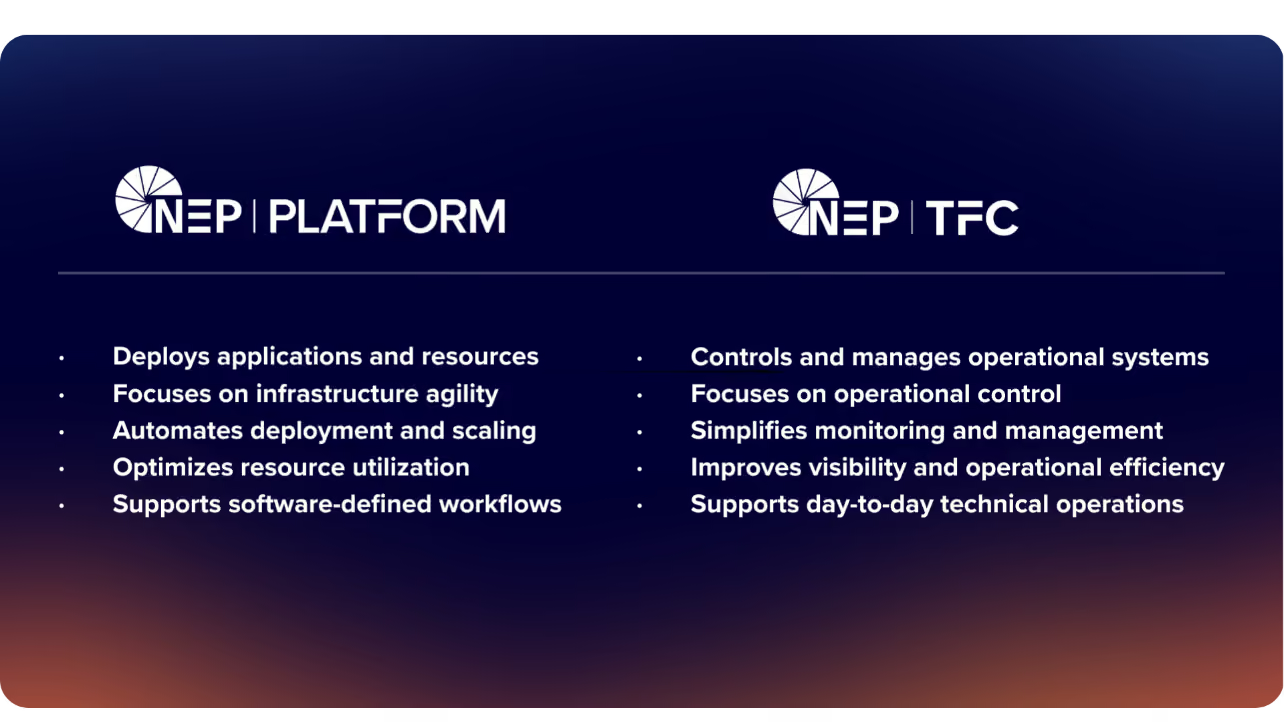
Using NEP’s solutions as examples:
- NEP Platform is the software orchestration platform.
- TFC is the broadcast control system.
Neither replaces the other.
Each solves a different layer of the operational challenge.
Looking Ahead:
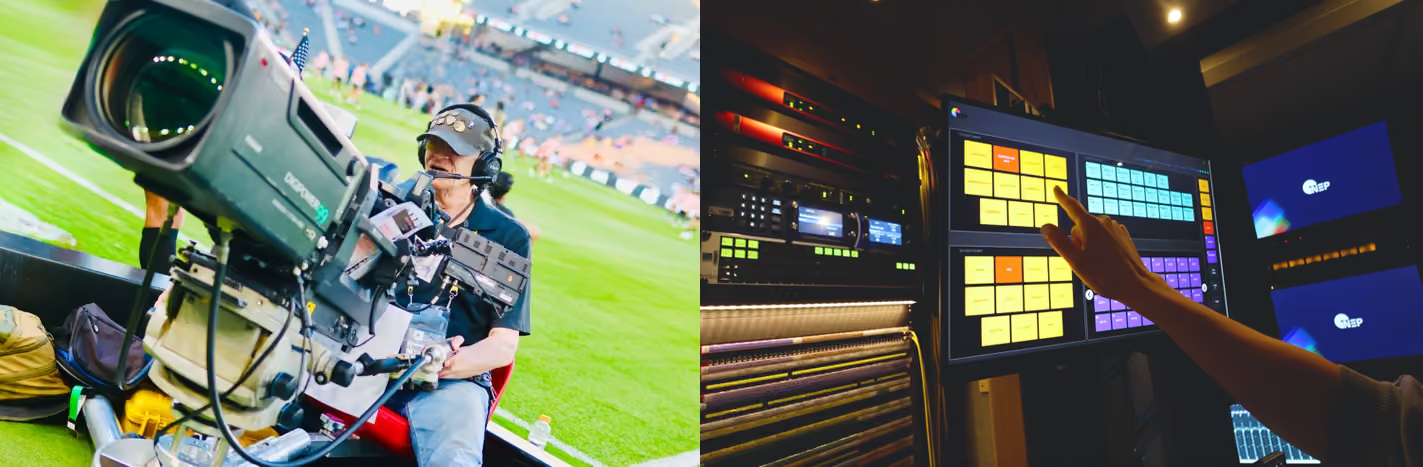
As media production becomes increasingly software-defined, understanding the distinction between orchestration and control will become increasingly important.
Software orchestration platforms and broadcast control systems solve different challenges, but together they help organizations build more flexible, scalable and efficient production environments.
In the next article in this series, we'll explore why organizations are increasingly adopting software-based production models, and why operational experience and support matter in software development.
Continue the Conversation
Every organization's path to software-based production is different. Whether you're exploring software orchestration, broadcast control or planning your long-term technology strategy, NEP's software solutions experts are here to help.
.png)
-Web.jpeg)
.jpg.jpeg)