
Blog Post
Why Operational Expertise Matters as Media Companies Move to Software-Based Production
Understanding Why the Teams Behind the Software Are Just as Important as the Technology Itself
In the first two articles in our software-based production series, we explored the different roles of software orchestration platforms like NEP Platform and broadcast control systems like TFC, and why media organizations are increasingly adopting software-based production models.
For the final article, we're looking at another part of that transition that is just as important as the technology: the expertise behind it.
As media organizations evaluate the different software solutions available, features and functionality are only part of the equation. An equally important question is whether the software has been designed around the realities of live production.
Live production environments are among the most demanding technology environments in the world, often bringing together multiple facilities, production and technical teams, vendors, networks, formats and workflows under strict timelines where reliability is critical.
Software designed for these environments needs to reflect how production teams actually operate, how infrastructure is deployed and managed, how workflows change from one production to another, and what happens when an issue needs to be resolved quickly.
That's why operational expertise matters in software development and delivery.
Building Software Around Real-World Production
Software built for live production benefits from teams with firsthand knowledge of the environments it is designed to support.
For more than 40 years, NEP has designed, integrated, operated and supported live productions at the highest levels of scale and complexity—including major global events spanning multiple venues, countries and weeks of continuous production, reaching millions of viewers around the world.
From mobile units and centralized production facilities to IP networks, remote production workflows and global media infrastructure, NEP's teams work alongside customers every day to solve the operational challenges these productions face.
That experience directly informs the development of both NEP Platform and TFC.
Both solutions have evolved from real-world production requirements and the experience of teams designing, deploying and operating production infrastructure around the world.
Challenges identified in live production can inform how the software evolves, while software can simplify, automate and improve the workflows NEP's operational teams manage every day.
The result is technology designed to deliver the reliability, flexibility and operational confidence customers expect.
The Software Expertise Behind NEP Platform and TFC
But who is actually building and continually evolving the software?
Modern software-defined production also requires dedicated software development expertise and the scale to continually develop, test, secure and support the technology.
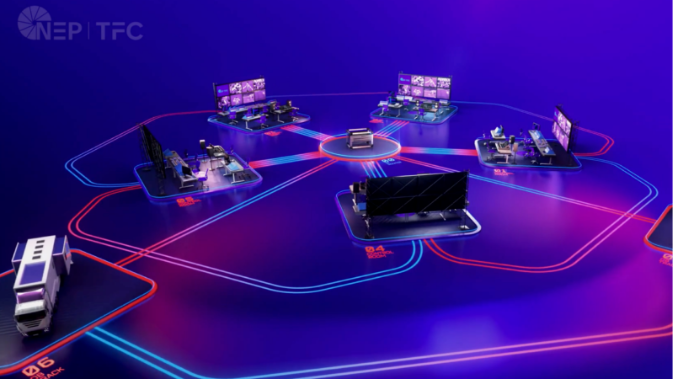
NEP Platform and TFC are backed by a geographically distributed software team of more than 50 professionals across the Americas, Europe, the Middle East, Asia, Australia and New Zealand, spanning software and engineering, software architecture and technical leadership.
That organization is complemented by a network of NEP Platform superusers across local markets—users with deep knowledge of the platform and how it is used in real production environments. Their experience and feedback help connect local operational needs with the teams developing and evolving NEP Platform globally.
Together, these teams and superusers combine software expertise with the broadcast and operational knowledge found across NEP's wider global organization.
Global Support, Delivered Locally
What happens when a customer needs hands-on support—or an issue requires deeper expertise?
As media organizations evaluate software-defined production, the support model behind the technology should be part of the decision. Live production requires more than access to a help desk; it requires people who understand the production environment and can draw on deeper expertise when it's needed.
We believe an effective support model should provide:
- Local expertise: Teams close to the customer who understand the production environment, workflows and operational requirements.
- Global resources: Local teams are backed by a wider network of software development, infrastructure and networking specialists, actively engaged to provide additional expertise when and where needed.
- 24/7 coverage: Support that follows the needs of live production across regions and time zones.
- Clear escalation and ownership: Defined processes for moving issues from local coordination to specialist teams, through resolution and closure.
- Continuous updates and security: Ongoing software updates, testing and security scanning that support reliable deployments.
NEP Platform and TFC are supported through a 24/7/365 follow-the-sun model spanning four time zones, with regional commissioning teams backed by infrastructure, network and software development specialists in every region.
In practice, a media organization in London can work directly with experts in its region who understand the local operation and can provide hands-on support. When a challenge requires additional expertise, that local team can draw on NEP's wider global network of software developers, infrastructure specialists, network engineers and operational experts.
The customer maintains a local relationship while gaining access to the resources and expertise of a global organization.
That's the model we believe increasingly complex, software-defined production environments require: global support, delivered with local expertise.
Technology Is Only Part of the Equation
Across this series, we've explored how software orchestration platforms and broadcast control systems serve different but complementary roles, and why media organizations are increasingly adopting software-based production models.
As production becomes more software-defined, the technology is only part of the equation. The expertise behind it—from software development and real-world production experience to global resources and local support—is just as important.
For NEP, bringing those capabilities together is central to how we develop and support NEP Platform and TFC, helping customers build more flexible, reliable and efficient production environments for what's next.
Continue the Conversation
Every organization's path to software-based production is different. Whether you're exploring software orchestration, broadcast control or planning your long-term technology strategy, NEP's software solutions experts are here to help.
.png)
-Web.jpeg)
.jpg.jpeg)